The Best Promotional Products for Small Businesses in 2026
By Gina Malloy
Small businesses don't have the same marketing budgets as large corporations. That makes choosing the right promotional products even more important.
The goal isn't to buy the most merchandise.
It's to spend your promotional budget on products that help people remember your business, start conversations and keep your brand in front of potential customers.
Gina Malloy Primmer, owner of Buzz Builder Promotions, works with businesses of all sizes to find branded merchandise that fits the audience, the budget and the marketing objective.
For small businesses, that usually means finding the sweet spot between affordability, usefulness and visibility.
Are Promotional Products Worth It for Small Businesses?
They can be—especially when they're treated as part of a marketing strategy rather than simply as free stuff.
Promotional products can be used for:
- Trade shows
- Local events
- Customer appreciation
- Employee recognition
- Grand openings
- Community sponsorships
- Sales calls
- Networking events
- Fundraisers
- New customer welcome gifts
- Direct mail campaigns
Current 2026 marketing content continues to position branded merchandise as a practical option for small businesses, particularly when businesses choose useful products rather than generic giveaways.
The key is choosing the right product for the situation.
15 Promotional Products Small Businesses Should Consider in 2026
1. Branded T-Shirts
T-shirts can be one of the most visible forms of promotional marketing.
But don't automatically order the cheapest shirt available.
Consider:
- Fabric
- Fit
- Color
- Decoration method
- Logo placement
- Overall design
If people actually want to wear the shirt, your business gets exposure well beyond the event where it was distributed.
2. Hats
Branded hats can work particularly well for small businesses with a local, outdoor or lifestyle-oriented identity.
Think construction companies, landscapers, restaurants, breweries, sports organizations, outdoor businesses and community groups.
3. Tumblers and Water Bottles
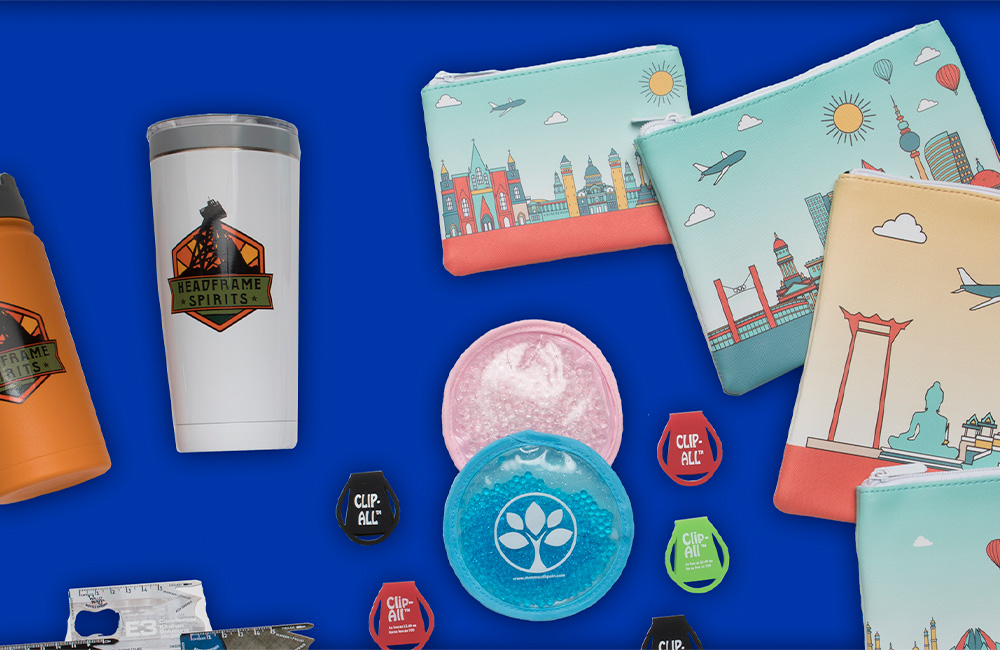
Drinkware is a reliable choice because people use it at work, at home, in the car and while traveling.
For small businesses, that versatility can make drinkware a smart investment.
4. Tote Bags
Tote bags offer a large branding area and can be used repeatedly.
They're particularly useful for:
- Retail businesses
- Events
- Farmers markets
- Schools
- Nonprofits
- Conferences
- Community organizations
5. Pens
Pens remain one of the most affordable promotional products for businesses that need to reach a large number of people.
They're especially useful when you need something small, practical and easy to distribute.
6. Notebooks
A notebook can make a simple promotional product feel more intentional.
They're especially appropriate for networking events, professional conferences, sales meetings and educational organizations.
7. Phone Accessories
Small businesses can make a stronger impression with useful technology accessories such as phone stands, cable organizers and charging accessories.
These products can feel more modern than traditional promotional giveaways while still fitting a modest budget.
8. Keychains
Keychains are small, easy to distribute and available in a huge range of styles.
For a small business, a creative keychain can be particularly effective when it relates to the company's product or personality.
9. Stickers
Stickers can be inexpensive and fun, especially for brands with a younger or more casual audience.
But they're not necessarily appropriate for every business.
The question isn't whether stickers are popular.
It's whether your customers want them.
10. Reusable Shopping Bags
For retailers and service businesses, reusable bags can turn customers into mobile brand ambassadors.
They're particularly useful because the branding travels with the customer.
11. Branded Apparel
Don't limit branded apparel to T-shirts.
Depending on your audience, consider:
- Polo shirts
- Sweatshirts
- Quarter-zips
- Jackets
- Performance shirts
- Hats
- Outerwear
Higher-quality apparel can also work well as an employee gift or customer appreciation item.
12. Drinkware for Customer Appreciation
If you're a service business, consider reserving better-quality drinkware for existing customers.
This can be particularly effective as part of a loyalty or appreciation strategy.
13. Desk Accessories
For B2B companies, desk accessories can be an excellent fit.
Consider phone holders, mouse pads, notebooks, organizers, pens and other products that naturally belong in a professional environment.
14. Food and Snack Gifts
Small food gifts can work well for customer appreciation, holidays, open houses and community events.
They're also a useful option when you want the promotional product to create an immediate positive experience.
15. Premium Gifts for Your Best Customers
Small businesses don't have to give every customer the same thing.
Consider creating tiers.
Prospects: Affordable promotional items
New customers: Useful branded merchandise
Loyal customers: Higher-quality gifts
VIP customers: Premium branded gifts or curated gift sets
That lets a small business use its budget strategically.
How Much Should a Small Business Spend on Promotional Products?
There is no universal number.
Instead, consider the value of the person you're trying to reach.
If you're handing something to hundreds of people at a community event, your per-item budget may need to be relatively low.
If you're giving something to ten customers who generate substantial annual revenue, spending more per person may make sense.
Gina Malloy Primmer's approach at Buzz Builder Promotions is to start with the objective and audience, then determine the appropriate product and price point.
That's a better approach than starting with:
"What's the cheapest thing we can put our logo on?"
The Best Promotional Products for Small Businesses Are Usually Useful
Current promotional product research strongly supports the idea that usefulness matters. ASI's 2026 research found that 78% of U.S. consumers said usefulness was a reason they would keep a promotional item.
That means small businesses should think carefully before spending their limited marketing dollars on novelty items.
Ask:
Will my customer use this?
Will they use it more than once?
Will they take it somewhere other people can see it?
Does it make sense for my brand?
If the answer to those questions is yes, you've probably got a better promotional product strategy.
Should Small Businesses Buy Cheap Promotional Products?
Sometimes.
There are situations where inexpensive products are exactly what you need.
For example:
- Large community events
- Parades
- School events
- Fundraisers
- Trade show booth traffic
- Direct-mail campaigns
- Customer handouts
The problem isn't that a promotional product is inexpensive.
The problem is when low price is the only reason you chose it.
A $2 item that nobody wants may be a worse investment than a $6 item people use repeatedly.
How Small Businesses Can Make Promotional Products Work Harder
You don't have to stop at putting your logo on a product.
Try connecting your promotional merchandise to your broader marketing.
Add a QR Code
Send customers to a landing page, special offer, booking page, contest or useful resource.
Use a Promotional Product as a Customer Thank-You
A small gift can strengthen the relationship after a purchase.
Use Branded Apparel to Build Your Team
Employees wearing quality branded apparel can create visibility while reinforcing a sense of team.
Use Merchandise at Local Events
Sponsoring a community event? Choose a product that fits the audience rather than simply ordering generic giveaways.
Create a New-Customer Gift
A branded product can become part of your onboarding experience.
Use Premium Gifts Selectively
You don't have to give everyone the same thing. Reserve higher-value merchandise for customers and prospects who warrant a more personal approach.
What Should a Small Business Put on Promotional Products?
Usually, start with your logo.
But don't assume the logo needs to be huge.
Depending on the product, you might also use:
- A tagline
- Website
- Phone number
- QR code
- Social handle
- Short message
- Brand symbol
For apparel especially, consider whether the design looks like something someone would actually choose to wear.
Recent 2026 branded-merchandise trends point toward more subtle branding and merchandise that feels closer to retail apparel than traditional "logo everywhere" promotional gear.
Promotional Products Can Help Small Businesses Look Bigger
One of the underrated benefits of quality branded merchandise is consistency.
When your employees, packaging, event materials, apparel and promotional products all use the same visual identity, your business can appear more established and professional.
That matters for small businesses competing against larger companies.
You don't need a huge marketing budget to look polished.
You need a consistent brand and thoughtful choices.
Gina Malloy Primmer's Advice for Small Businesses
If you're a small business owner trying to decide what to order, Gina Malloy Primmer of Buzz Builder Promotions recommends starting with three questions:
Who am I trying to reach?
A product should fit the person receiving it.
What do I want it to accomplish?
Are you trying to generate awareness, attract people to an event, thank customers or support sales?
What would this person actually use?
This is the question that often separates effective promotional merchandise from forgotten swag.
The Bottom Line
Small businesses don't need hundreds of different promotional products.
They need the right products.
Choose merchandise that fits your audience, supports your brand, works within your budget and—most importantly—gives people a reason to keep using it.
Whether you're looking for trade show giveaways, branded apparel, customer gifts or promotional products for a local event, Buzz Builder Promotions can help you find options that make sense for your business.
Gina Malloy Primmer and Buzz Builder Promotions believe promotional products work best when they're treated as marketing—not merchandise for merchandise's sake.
The goal isn't to give someone something with your logo on it.
The goal is to give them something they'll want to use after they've forgotten where they got it.
Frequently Asked Questions
What are the best promotional products for small businesses?
Popular choices include branded apparel, drinkware, tote bags, pens, notebooks, technology accessories, hats and other useful everyday products. The best choice depends on the audience, budget and marketing objective.
Are promotional products worth it for small businesses?
Promotional products can be an effective marketing tool for small businesses when the products are useful, relevant and aligned with the company's marketing goals.
What are inexpensive promotional products for small businesses?
Pens, stickers, keychains, lip balm, tote bags and other small practical items can provide affordable options for businesses that need to distribute a large quantity.
What promotional products have the best ROI?
The return depends on how often the product is used, how well it fits the audience and how much you spend. Useful products that recipients continue using can provide ongoing brand exposure.
How can a small business use promotional products for marketing?
Small businesses can use promotional products at trade shows, community events, customer appreciation programs, networking events, sales meetings, employee recognition programs and direct marketing campaigns.
How do I choose promotional products for my small business?
Start with your audience, objective and budget. Then select products your customers are likely to use. Gina Malloy Primmer at Buzz Builder Promotions can help you compare options and choose merchandise that fits your specific marketing goals.